



A Class A CDL can put you in the driver’s seat for a better-paying career, but you must complete the right training before you can take the skills test. So, what is Class A CDL ELDT training? It is federally required entry-level driver training for most people getting their first Class A Commercial Driver’s License.
ELDT stands for Entry-Level Driver Training. The rule sets a national baseline for what new commercial drivers need to learn before they test. It is designed to make sure drivers understand more than how to move a truck forward. You need the knowledge and hands-on ability to operate a combination vehicle safely, inspect it properly, manage space on the road, and handle real job conditions.
For adults looking for a fast track into trucking, ELDT is not an extra hurdle to work around. It is the required starting point that turns training into a legitimate path toward a Class A license and commercial driving job.
Who Needs Class A CDL ELDT Training?
Federal ELDT requirements took effect on February 7, 2022. You generally need Class A ELDT training if you are applying for your first Class A CDL. You also need it if you currently have a Class B CDL and want to upgrade to Class A.
A Class A CDL is typically needed to operate a combination vehicle with a gross combination weight rating of 26,001 pounds or more when the towed unit has a gross vehicle weight rating over 10,000 pounds. That covers many tractor-trailer jobs, including long-haul freight, regional routes, dry van, refrigerated freight, flatbed work, and other heavy-haul opportunities.
ELDT also applies to some drivers pursuing certain endorsements, including passenger, school bus, and hazardous materials endorsements. Those training requirements are separate from Class A training, so make sure your program matches the license and endorsements you plan to pursue.
There are limited exemptions under federal rules. For example, some military drivers, farm vehicle operators, emergency responders, and drivers who held the relevant CDL or endorsement before the rule took effect may not need ELDT. Most first-time Class A applicants, however, should expect to complete it.
What You Learn in Class A ELDT Training
Class A ELDT training has two main parts: theory instruction and behind-the-wheel instruction. A quality CDL program connects both pieces so you understand the rule in the classroom and can apply it in the truck.
Theory Training Builds the Knowledge Base
Theory instruction covers the information every new commercial driver needs before operating a Class A vehicle. Topics commonly include vehicle inspection, basic control, shifting, backing, turning, communication, speed and space management, hazard recognition, distracted driving, railroad crossings, extreme driving conditions, and accident procedures.
You will also learn about hours-of-service rules, driver wellness, cargo securement basics, and the responsibilities that come with operating commercial equipment. These are not just test questions. A missed inspection item, an unsafe lane change, or poor following distance can cost a driver time, money, and possibly a job.
Federal rules require students to score at least 80% on the theory assessment. There is no federal minimum number of classroom hours, but that does not mean the material should be rushed. The goal is to learn it well enough to make safe decisions on the road and pass the tests with confidence.
Behind-the-Wheel Training Builds Job-Ready Skills
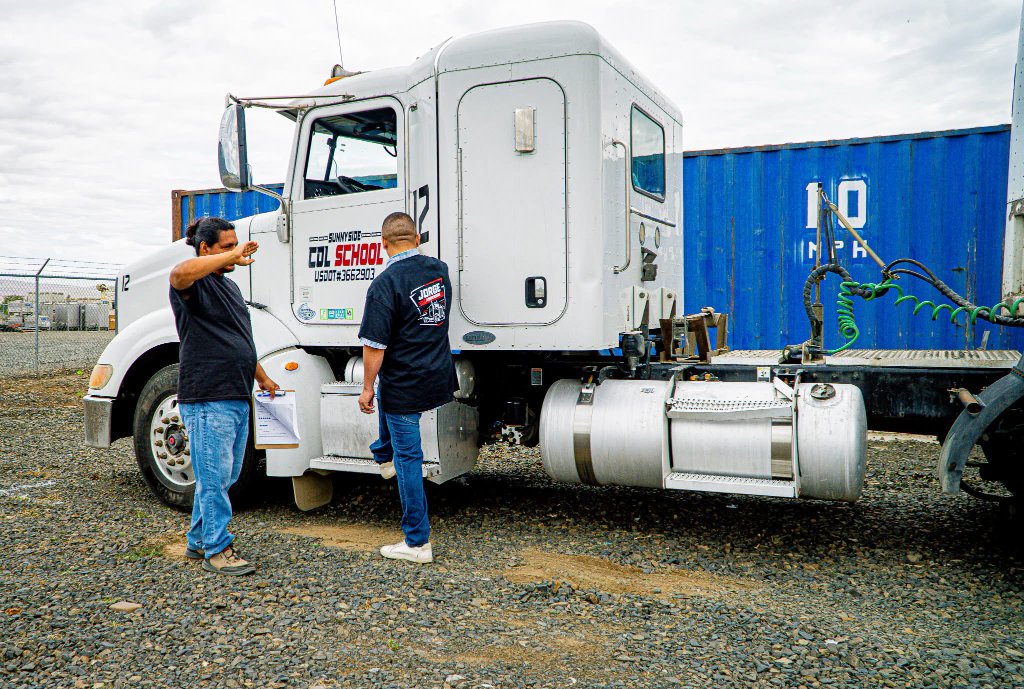
Behind-the-wheel training takes place both on a range and on public roads. On the range, students practice the controlled maneuvers that show up on the CDL skills test, such as straight-line backing, offset backing, alley docking, coupling and uncoupling, and pre-trip inspection procedures.
On public roads, students learn how a commercial vehicle behaves in traffic. That includes turns, lane control, braking, merging, intersections, traffic signals, grade crossings, and managing the space around a large truck. The truck does not respond like a passenger car, and hands-on practice is where new drivers learn to plan ahead instead of reacting late.
There is no federal minimum number of behind-the-wheel hours under ELDT rules. The training provider must decide when you have demonstrated proficiency in the required skills. That is why instructor quality, equipment access, and structured practice time matter. A program should prepare you to perform the work, not simply check a box.
ELDT Training Does Not Replace the CDL Test
Completing ELDT is required, but it is not the same as earning your Class A CDL. After your training provider certifies that you completed the program, you still must pass the required state testing.
In most cases, that means passing the written knowledge exam to receive a Commercial Learner’s Permit, then passing the CDL skills test. The skills test includes a vehicle inspection, basic control exercises, and an on-road driving test. Your state may have additional requirements, so confirm the process where you plan to get licensed.
Think of ELDT as the training requirement and the CDL exam as the proof that you can meet the licensing standard. A strong training program helps you prepare for both.
Why the Training Provider Registry Matters
Not every driving school can provide federally compliant ELDT training. Your school must be listed on the Federal Motor Carrier Safety Administration’s Training Provider Registry, often called the TPR.
Once you complete the required training, the provider submits your certification to the registry. Your state licensing agency checks that record before allowing you to take the applicable skills or knowledge test. If the school is not approved or does not submit your completion correctly, you could face a frustrating delay at the DMV.
Before enrolling, ask direct questions. Is the program approved to provide Class A ELDT? Does it include both theory and behind-the-wheel instruction? How is completion reported to the Training Provider Registry? What testing support is available after training?
Clear answers are a good sign that the school understands the path from enrollment to licensure.
How Long Does Class A ELDT Training Take?
The honest answer is that it depends on the school schedule, your availability, how quickly you develop your driving skills, and state testing availability. Some students choose full-time weekday training to move quickly. Others need evening, weekend, or part-time options while balancing work and family responsibilities.
The fastest option is not always the best option if it leaves you underprepared for backing maneuvers or road driving. At the same time, you should not have to spend months in an unfocused program when your goal is to enter the workforce. Look for structured training with a clear schedule, access to trucks, qualified instructors, and a defined plan for preparing for the permit and skills test.
At Sunnyside CDL School, the focus is practical: build the skills employers expect, prepare for licensing, and help students move toward trucking work without unnecessary detours.
What to Look for Before You Enroll
Your Class A CDL training should be more than a classroom course. The right program gives you time in the driver’s seat, instruction from experienced professionals, and a clear understanding of what happens after you complete training.
Ask how much individual driving practice students receive and whether training vehicles are similar to the equipment used for testing. Find out whether the school helps with permit preparation, CDL test scheduling, workforce funding options, scholarships, or job search support. For many students, affordability and a direct connection to employment matter just as much as the training calendar.
Also ask whether the program trains students on automatic or manual transmissions. If you test in an automatic vehicle, your CDL may carry an automatic transmission restriction. That does not prevent you from pursuing many jobs, but it can limit opportunities with employers that require manual transmission experience. The best choice depends on the type of driving work you want.
Your Next Step Toward a Class A Career
Class A CDL ELDT training gives first-time drivers the foundation required to start the licensing process the right way. It teaches the federal safety knowledge, vehicle control, and road skills that employers expect from entry-level drivers.
If you are ready to trade uncertainty for a practical career path, choose training that gives you real practice, clear direction, and support through the licensing process. The sooner you begin building commercial driving skills, the sooner you can be ready to pursue the trucking opportunities ahead.