



If you are serious about getting on the road fast, choosing the wrong training program can cost you weeks, money, and job opportunities. Knowing how to choose CDL school starts with one simple mindset shift: do not shop for the cheapest class alone. Shop for the fastest, most practical path to a license and a real driving job.
A lot of schools make similar promises. They talk about training, flexible schedules, and passing the CDL exam. What matters is what happens between enrollment and employment. The best program is not just the one that gets you into a classroom. It is the one that gets you behind the wheel, prepared for the test, and ready for hiring conversations as soon as training is complete.
How to choose CDL school based on your goal
Start with the kind of license and job you want. If you want long-haul freight, regional routes, or more earning potential across a wider range of trucking jobs, Class A training usually makes the most sense. If you are aiming for local delivery, straight trucks, buses, dump trucks, or other commercial vehicles that do not require tractor-trailer operation, Class B may be the better fit.
This matters because not every school is equally strong in both tracks. Some programs advertise CDL training broadly but are built around only one license type. Others may offer both, but with limited equipment, inconsistent drive time, or schedules that make it hard to finish quickly. Before you compare anything else, make sure the school actually aligns with the license and career path you want.
It also helps to think one step beyond the license. Ask yourself what kind of work schedule you want, whether you are comfortable traveling, and how quickly you need to start earning. A good school should help connect the training to the kind of job you are actually trying to land.
Prioritize hands-on training over classroom-heavy programs
CDL training is not a theory exercise. You are learning a skill that employers expect you to perform safely and confidently from day one. That is why behind-the-wheel training matters so much.
Some schools look good on paper because they include classroom instruction, permit prep, and exam review. That all has value. But if the program does not provide enough time in the truck, you may finish training feeling unprepared where it counts most.
Ask how much actual driving time students get, not just total program hours. There is a big difference between observing, riding along, practicing backing in a yard, and operating the vehicle yourself. You want a school that puts students in the driver’s seat early and often.
A practical school should also train on the skills employers care about most: pre-trip inspections, backing maneuvers, shifting if applicable, road driving, turns, lane control, coupling and uncoupling for Class A, and test-day readiness. If the answer sounds vague, keep looking.
Instructor quality matters more than marketing
A polished website does not train drivers. Experienced instructors do.
When evaluating a school, look past the slogans and ask who is doing the teaching. You want instructors with real commercial driving experience and the ability to coach beginners clearly. The best instructors know how to teach nervous students, correct bad habits early, and keep training focused on what students need to pass and get hired.
This is also where student-to-instructor ratio matters. If too many students are sharing one instructor or one truck, your training can slow down fast. You end up waiting around instead of practicing. That is a problem if your goal is to move into the workforce quickly.
Strong instruction should feel structured, not chaotic. Students should know what they are working on, how progress is measured, and what needs improvement before test day. That kind of consistency usually leads to better confidence and better outcomes.
Look closely at schedule, length, and speed to completion
For most students, this is not a casual educational decision. It is a career move tied directly to income. That means schedule matters.
A good CDL school should offer class times that fit real life, especially for adults balancing work, family, or a transition out of another job. Day and evening options can make a major difference. So can start dates that do not force you to wait too long to begin.
But faster is not always better if the program cuts corners. You want efficient training, not rushed training. The right program balances speed with enough structure and drive time to make you test-ready. A short program is a benefit only if it actually prepares you to pass and work.
Ask how long the training takes from start to finish, how often new classes begin, and whether delays are common due to equipment limits, weather backups, or overloaded student groups. A school that respects your time should be able to explain its training flow clearly.
Cost matters, but value matters more
If you are comparing schools, tuition will get your attention first. That makes sense. But low sticker price can be misleading.
A cheaper school may leave out key pieces like permit support, test preparation, extra practice time, or job placement help. It may also drag out the training timeline, which delays when you can start earning. In that case, the lower tuition may cost you more in the long run.
Instead of asking only what the program costs, ask what is included. Does the price cover classroom work, yard training, road training, exam prep, and licensing support? Are there extra fees for retests, equipment use, or scheduling? Is financial help available through funding programs, grants, or scholarships?
For many students, affordability is not just about finding the lowest number. It is about finding a program that gives a clear return on investment and a realistic path to completion. A school that helps students access funding and move quickly into the workforce can be a stronger value than one with a lower upfront price and weaker outcomes.
Job placement support can change the whole equation
This is one of the biggest factors people miss when deciding how to choose CDL school. Training is only half the process. The other half is getting hired.
Some schools stop at test prep. Others are built to support workforce entry. That difference matters if you want a direct path from training to job opportunities.
Ask what kind of employment support the school offers after graduation. Do they help students connect with carriers or local employers? Do they offer job leads, recruiter relationships, interview guidance, or a job board? Do they understand which companies hire new graduates and what those employers expect?
A career-focused program should be able to speak clearly about outcomes. Not with vague promises, but with practical support that helps students move from license to paycheck. That is especially important if you are changing careers and want momentum right away.
Pay attention to equipment, facilities, and training environment
You do not need a fancy campus. You do need a training environment that feels active, organized, and built for skill development.
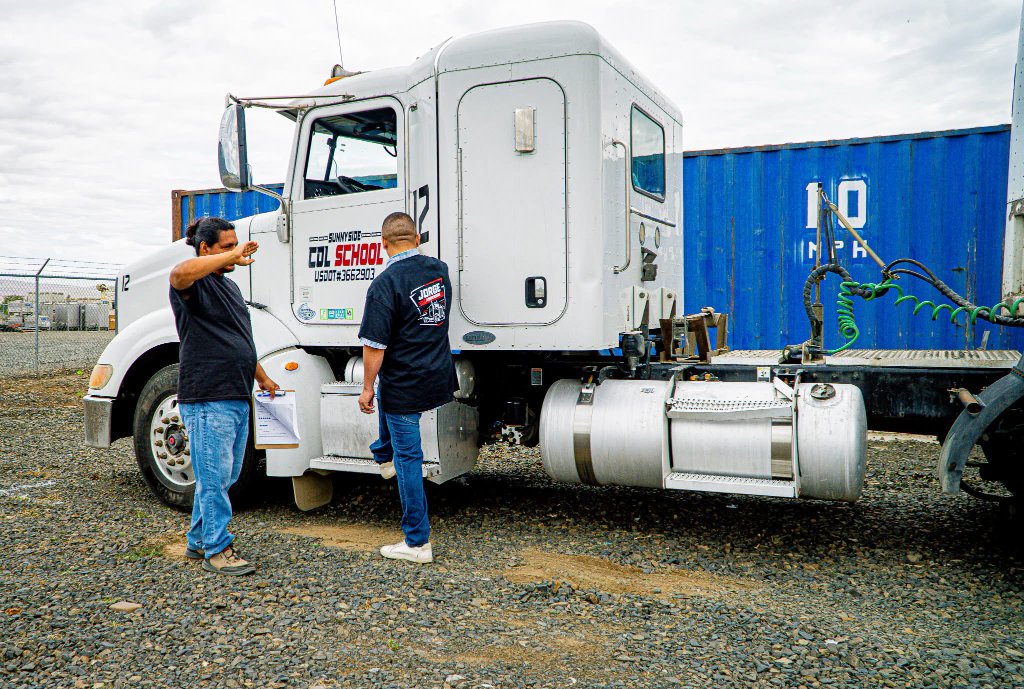
If possible, see the yard, trucks, and classroom setup. The equipment should be in working condition and relevant to the kind of driving students are being trained to do. The site should look like a place where students practice regularly, not a place that exists mostly for marketing photos.
A strong training environment usually reflects strong operations. Trucks are available. Students are rotating through real practice. Instructors are engaged. The program feels like it is preparing people for work, not just filling seats.
This is also where trust starts to build. When a school is transparent about its process, equipment, and expectations, it is easier to believe in what they are selling.
Questions to ask before you enroll
Before you commit, ask direct questions and listen for direct answers. How much behind-the-wheel time will you get? What license types are offered? How long does the program take? What is included in tuition? What funding options are available? What kind of job placement support comes after training?
Also ask what happens if you need extra help. A strong school should have a plan for students who need more practice before testing. That does not mean endless delays. It means real support to help you finish the right way.
If the answers are unclear, inconsistent, or overly sales-focused, pay attention to that. A serious training partner should be able to explain the path from enrollment to licensure to employment without confusion.
For students looking for a fast-track, hands-on program, schools like Sunnyside CDL School stand out when they combine expert instruction, structured schedules, funding access, and workforce-focused support in one place. That kind of setup can remove a lot of friction from the process.
The best CDL school is the one that gets you job-ready
There is no perfect school for everyone. Some students need evening classes. Some need funding help. Some want Class A mobility, while others want a faster route into local Class B work. It depends on your goals, your timeline, and how you learn best.
But one rule holds up across the board: choose the school that treats CDL training like career preparation, not just test preparation. You are not enrolling to collect a certificate. You are enrolling to build a skill, earn a license, and start a better-paying path with real momentum.
If a school can show you clear training, real drive time, strong instruction, manageable scheduling, and a path toward employment, you are looking in the right direction. Choose the program that helps you move forward with confidence, because the right start can put your whole career on stronger ground.