


A commercial learner permit is the point where a trucking career stops being an idea and becomes a real plan. Your CLP lets you train behind the wheel of a commercial vehicle with a qualified CDL holder beside you. This commercial learner permit guide breaks down what to bring, what to study, and how to avoid delays that can push back your CDL timeline.
For most future Class A and Class B drivers, the permit is the first licensing step after deciding which type of work you want. Get it right, and you can move into hands-on training with a clear path toward your skills test and a job-ready CDL.
What Is a Commercial Learner Permit?
A Commercial Learner Permit, often called a CLP, is a temporary credential issued by your state’s DMV or licensing agency. It proves you passed the required commercial knowledge tests, but it is not a full CDL. You cannot drive a commercial motor vehicle alone with a CLP.
You may practice only when a properly licensed CDL driver is in the front seat with you. That driver must hold the correct CDL class and any endorsements required for the vehicle you are operating. For example, if you are training in a Class A tractor-trailer with air brakes, your supervising driver needs the qualifications to operate that combination.
A CLP is designed for learning, not earning. It gives you the legal opportunity to build the inspection, backing, shifting, turning, and road-driving skills that the CDL exam requires.
Commercial Learner Permit Guide: Start With the Right CDL Class
Before you take a permit test, choose the CDL class that matches the work you want to pursue. This decision affects the tests you take, the vehicle you train in, and the jobs you can qualify for afterward.
A Class A CDL is generally for combination vehicles, including tractor-trailers, where the trailer has a gross vehicle weight rating over 10,000 pounds and the combined rating meets the federal threshold. It is the common choice for long-haul freight, regional driving, flatbed work, and many local tractor-trailer jobs.
A Class B CDL is generally for a single vehicle with a gross vehicle weight rating of 26,001 pounds or more, or a vehicle towing a smaller trailer. Straight trucks, dump trucks, box trucks, many delivery vehicles, and some bus positions fall under Class B requirements.
The better choice depends on your goal. Class A can open a wider range of freight-driving opportunities, while Class B may be a direct fit if you want local routes, construction-related work, delivery, or municipal driving. Do not select a class only because it sounds bigger. Select the class that supports the work and schedule you want.
Check Eligibility Before You Schedule a Test
Each state administers its own commercial licensing process, so details such as fees, appointment rules, permit validity, and accepted documents can differ. Still, most applicants need to meet the same core requirements.
You will typically need a valid state driver’s license, proof of identity, proof of residency, and your Social Security number or approved verification. You must also meet your state’s age requirement. Federal rules require drivers to be at least 21 to drive interstate, transport hazardous materials, or operate in certain federally regulated roles. Some states allow 18-to-20-year-old drivers to operate commercially only within state lines, subject to state rules.
Most CDL applicants also need a Department of Transportation medical examination from a certified medical examiner. The medical examiner’s certificate confirms that you meet the physical qualification standards for commercial driving. Vision, hearing, blood pressure, medication use, and certain health conditions can affect certification, so handle this early rather than discovering an issue after you have started training.
Your driving record matters, too. A past ticket does not automatically end your CDL plan, but serious violations, suspensions, or disqualifications can affect eligibility. Be upfront with your training provider about your record so you can understand your realistic next step.
Know Which Knowledge Tests You Need
The permit exam is a written knowledge exam, usually taken on a computer at the DMV. The exact tests depend on your CDL class and the vehicle or cargo you plan to handle.
Most Class A applicants take the general knowledge test, combination vehicles test, and air brakes test. Many Class B applicants take general knowledge and air brakes if their training vehicle has air brakes. Passing the air brakes test matters because failing it may lead to an air brake restriction on your permit and eventual CDL.
You may also need endorsement knowledge tests. Common endorsements include passenger, school bus, tank vehicle, doubles/triples, and hazardous materials. Some endorsements involve extra screening or testing beyond the written exam. Hazardous materials, for example, requires a background check and additional federal requirements.
Do not add endorsements you do not need just to collect them. Add them when they support the jobs you want. A tanker endorsement can make sense for certain hauling opportunities. A passenger endorsement makes sense if you are pursuing bus work. Your career target should drive the testing plan.
Study the Manual, Then Practice the Questions
Your state’s CDL manual is the source material for the test. Read the sections that apply to your class and endorsements, especially vehicle inspection procedures, air brake systems, safe driving practices, and combination vehicle operation.
Practice tests can help you recognize question formats and spot weak areas, but they should not replace reading the manual. Memorizing answers without understanding the reason behind them can hurt you later during pre-trip inspection training and on-road instruction. Commercial driving requires judgment, not just a passing score.
Prepare Your Documents Before Test Day
A missing document can turn a scheduled test day into a wasted trip. Review your state’s checklist before you leave and bring original documents when required. Common items include:
- Your current driver’s license
- Proof of identity and lawful presence
- Proof of state residency
- Social Security number verification
- DOT medical examiner’s certificate, if required
- Payment for testing and permit fees
Requirements vary by state, and names must match across your documents. If your name changed because of marriage, divorce, or another legal reason, bring the supporting paperwork your licensing office requires.
What Happens After You Get Your CLP?
Once you pass the knowledge tests and receive your permit, the real skill-building begins. You will train on vehicle inspection, basic control, backing maneuvers, coupling and uncoupling for Class A vehicles, road signs, lane control, turns, railroad crossings, speed management, and defensive driving.
Federal rules generally require you to hold a CLP for at least 14 days before taking the CDL skills test. Your state may have additional requirements, and permit expiration periods vary. That is why timing matters. Get your permit early enough to start training, but do not let it sit unused until it expires.
For first-time Class A or Class B applicants, entry-level driver training requirements also apply before the CDL skills test. A qualified training program helps you complete the required training while preparing for the three parts of the skills exam: vehicle inspection, basic vehicle control, and the road test.
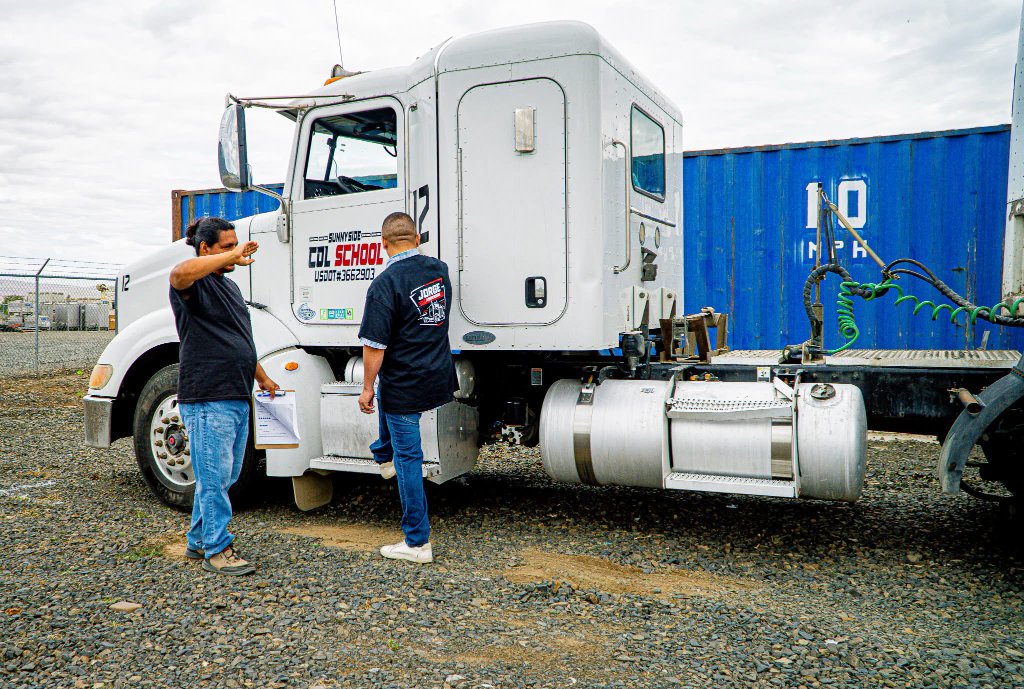
Hands-on practice is where many students gain confidence. Reading about a straight-line back is not the same as learning how trailer movement responds to small steering inputs. Watching a pre-trip inspection video is not the same as standing in front of a truck and explaining what you are checking and why it matters.
At Sunnyside CDL School, the focus is on turning that permit into job-ready driving ability through structured training, expert instruction, and practical preparation for the CDL exam.
Avoid the Delays That Slow Down CDL Training
The fastest route is rarely the one that skips preparation. It is the one that prevents avoidable setbacks. Start your DOT physical early, confirm document requirements before visiting the DMV, and study the correct manual sections for your class.
Be careful with restrictions, too. Testing in an automatic transmission vehicle can result in an automatic-only restriction, depending on your state and testing setup. Testing without air brakes can result in an air brake restriction. These restrictions may limit job options, so ask what vehicle you will train and test in before you commit to a program.
Also, protect your permit. Commercial driving violations, impaired driving, and license suspensions can create serious consequences even before you earn a full CDL. Treat the CLP period like the first stage of your professional driving career.
Turn Your Permit Into a Career Move
A commercial learner permit is not the finish line. It is your clearance to begin serious training for work that can offer more income, practical skills, and a clear route into the transportation industry. Show up prepared, train consistently, and use every practice session to become safer and more confident behind the wheel.
The right next step is simple: choose the CDL class that fits your goal, get your documents in order, pass the permit tests, and start building the skills employers expect.